
The Foundation of Every Professional Result
Why Technique Matters More Than Products
When I begin working with new students, I always start with a consultation. I ask them what they expect and how they imagine achieving a certain makeup look. Very often, the answers revolve around products, brands, or trends. Rarely does someone mention the most important factor — technique.
Technique is what truly creates the result. It is the difference between makeup that looks applied and makeup that looks refined, natural, and long-lasting.
Many people believe that if they use the right products, they will automatically achieve a professional look. In reality, even the best products cannot compensate for a lack of technique. At the same time, with the right technique, it is possible to achieve exceptional results using minimal product.
What Technique Really Means in Makeup
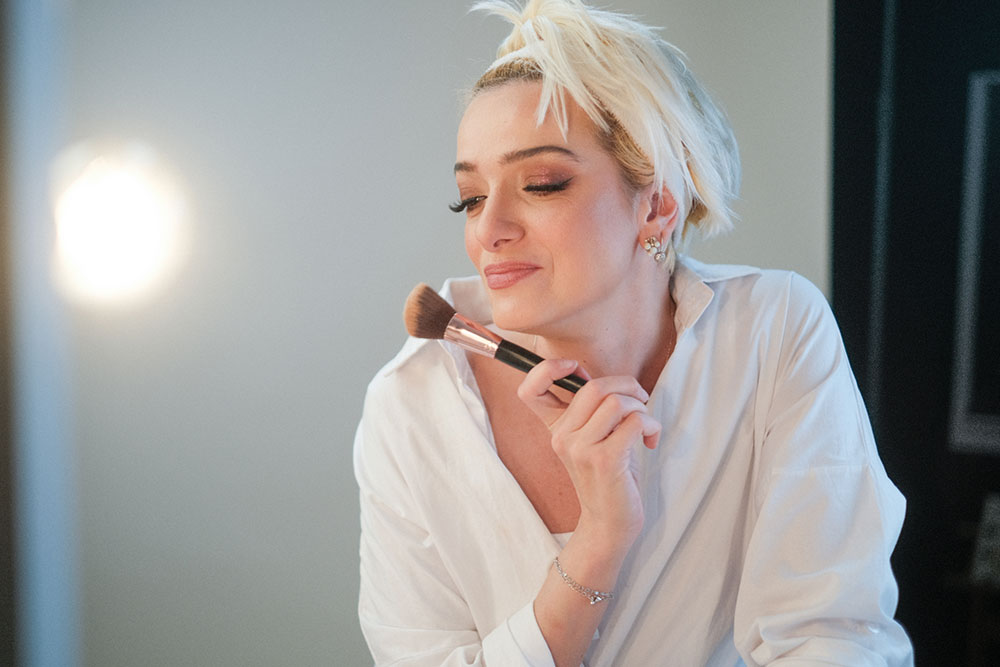
Technique is not just the act of applying makeup. It is the method behind every movement. It includes how you hold your tools, how much pressure you use, how you build layers, and how you blend everything into the skin.
In practice, technique determines whether makeup sits on the surface or becomes part of the skin. When done correctly, the product does not look separate from the face. Instead, it integrates seamlessly, enhancing the natural features rather than masking them.
This is why technique is not something optional or secondary. It is the core of every successful makeup application.
There Is No Perfect Order — Only a Controlled Process
One of the most common misconceptions in makeup is that there is a strict order that must be followed. Students often ask whether they should apply foundation first or start with the eyes.
The truth is that both approaches are valid. Many professional makeup artists work differently, depending on their personal style and workflow.
In my own work, I sometimes begin with the eyes. However, most often I prefer to start with skincare, then move to the base, and only then continue with the eyes. This approach gives me a sense of control and allows me to maintain a clean, balanced result.
What matters is not the order itself, but the consistency and precision within each step. Technique allows flexibility. Without technique, even the correct order will not lead to a professional result.
The Connection Between Technique and Longevity
One of the most important aspects of technique is how it affects the longevity of makeup. A well-executed application should last throughout the day, regardless of the occasion.
When technique is properly applied, makeup remains stable. It does not disappear, it does not settle into fine lines, and it does not lose its structure. The skin retains a fresh and polished appearance for hours.
On the other hand, when technique is lacking, makeup often fades quickly. It may look uneven, heavy, or unstable. This is not necessarily because of the products, but because they were not applied in a way that allows them to perform correctly.
Longevity is not accidental. It is a direct result of how the makeup is applied.
Blending as the Essential Skill
Among all elements of technique, blending is the most important. It is the process that transforms separate products into one cohesive result.
Blending requires patience, control, and attention to detail. It is not about quickly moving a brush across the skin. It is about gradually working the product into the surface until there are no visible edges.
This applies to foundation, eyeshadow, contour, and every other step. When blending is done correctly, the makeup appears soft, balanced, and effortless.
Without proper blending, even the most carefully chosen colors and products will not achieve the desired effect.
Technique Is Not About More — It Is About Control
Another common misunderstanding is the idea that more product leads to a better result. In reality, professional makeup is built with control, not quantity.
The goal is to achieve maximum effect with minimal product. This requires an understanding of how to layer, how to adjust pressure, and how to build gradually.
When too much product is applied without control, the result becomes heavy and unstable. When technique is used correctly, even a small amount of product can create a refined and long-lasting finish.
This is why technique allows freedom. Once it is mastered, there is no need to rely on excess or overcorrection.
How This Approach Is Taught in My Courses
In my courses at Face Style Studio, the focus is always on technique. While we cover products and looks, the priority is teaching how to work with precision and understanding.
Students learn how to control their movements, how to adapt to different skin types, and how to create results that last. The goal is not to memorize steps, but to develop a skill that can be applied in any situation.
This applies equally to those who want to work professionally and to those who want to improve their personal makeup routine.
Final Thought
Makeup is often perceived as something visual, but behind every successful look there is a structured and intentional process.
Technique is what brings consistency, confidence, and quality. It allows makeup to enhance rather than overwhelm, and to last rather than fade.
Understanding technique changes the way you approach makeup entirely. It shifts the focus from copying results to creating them with purpose.
And that is what defines a professional result.